
In today’s highly competitive and interconnected business landscape, organizations across industries are constantly seeking ways to demonstrate reliability, quality, and efficiency to customers, partners, and regulators. One of the most recognized and respected mechanisms for achieving this is ISO certification. Developed by the International Organization for Standardization (ISO), these voluntary international standards provide frameworks that help organizations improve processes, reduce risks, and enhance customer satisfaction. From manufacturing giants to small service providers, ISO certification has become a hallmark of operational excellence and credibility.
This article explores four key aspects of ISO certification: what it actually means, the most popular standards and their specific benefits, the step-by-step certification process, and the tangible advantages along with common challenges organizations face when pursuing it.
1. What ISO Certification Really Means
ISO certification is not a product label or a regulatory requirement imposed by governments in most cases; rather, it is a formal recognition that an organization’s management system conforms to a specific ISO standard. The International Organization for Standardization, founded in 1947 and headquartered in Geneva, comprises representatives from national standards bodies of over 160 countries. ISO does not certify organizations itself. Instead, it develops the standards, and independent third-party certification bodies (also called registrars) conduct audits to verify compliance.
When an organization becomes “ISO certified,” it means an accredited certification body has audited its processes and found them aligned with the requirements of the chosen standard. The certificate is typically valid for three years, with annual surveillance audits to ensure ongoing compliance. Certification can cover the entire organization or be limited to specific sites, divisions, or processes.
2. The Most Widely Adopted ISO Standards and Their Benefits
Several ISO standards have achieved global recognition, but a few dominate the certification landscape.
ISO 9001: Quality Management By far the most popular, with over one million certificates issued worldwide, ISO 9001 focuses on customer satisfaction and continual improvement of the quality management system (QMS). It is applicable to any organization, regardless of size or sector. Companies adopting ISO 9001 typically see reduced waste, fewer customer complaints, and better supplier relationships.
ISO 14001: Environmental Management This standard helps organizations minimize their environmental footprint, comply with regulations, and demonstrate sustainability commitment. In an era of increasing climate awareness, ISO 14001 certification has become essential for industries such as manufacturing, oil and gas, and construction.
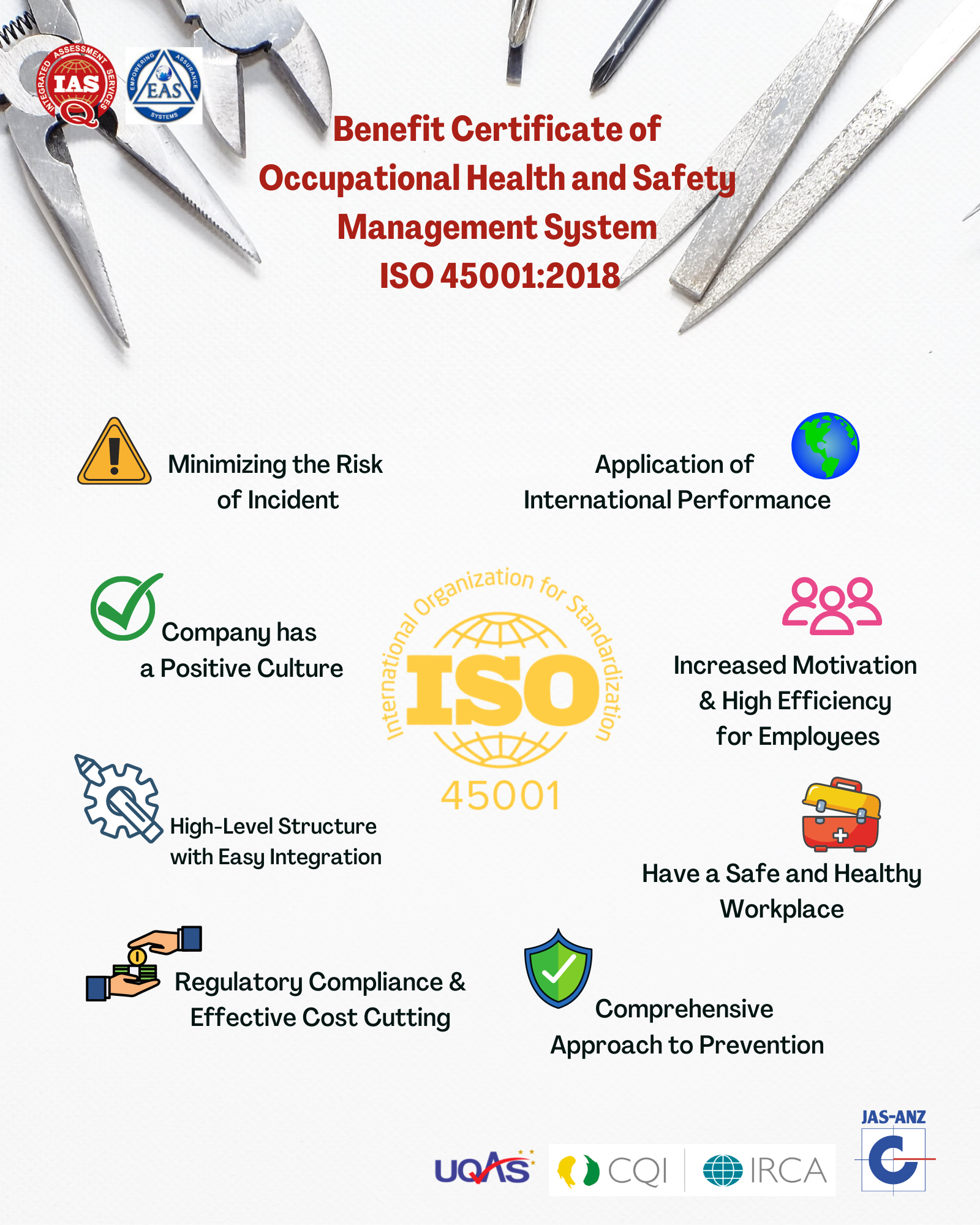
ISO 45001: Occupational Health and Safety Replacing the older OHSAS 18001, ISO 45001 provides a framework to improve employee safety, reduce workplace risks, and create better working conditions. It is particularly valuable in high-risk sectors like construction, mining, and chemicals.
ISO 27001: Information Security Management With cyber threats escalating, ISO 27001 has surged in popularity. It helps organizations protect confidential data, manage information security risks, and build stakeholder confidence in an increasingly digital world.
Other notable standards include ISO 22000 (food safety), ISO 13485 (medical devices), and ISO 50001 (energy management), each tailored to specific industry needs.
3. The Certification Process: From Gap Analysis to Celebration
Obtaining ISO certification is a structured journey that typically takes 6 to 18 months, depending on the organization’s size and readiness.
The process generally follows these stages:
Commitment and Planning – Top management commits resources and appoints a project team.
Gap Analysis – The current system is compared against the chosen standard’s requirements to identify deficiencies.
System Design and Documentation – Policies, procedures, objectives, and records are developed or updated.
Implementation – Employees are trained, and the new or improved processes are put into practice.
Internal Audit – The organization conducts its own audit to verify effectiveness.
Management Review – Leadership evaluates results and decides on corrective actions.
Stage 1 Audit (Document Review) – The certification body reviews documentation and readiness.
Stage 2 Audit (On-site/Main Audit) – Auditors examine actual implementation through interviews, observations, and record sampling.
Certification Decision – If no major nonconformities are found, the certificate is issued.
Surveillance and Recertification – Annual surveillance audits and a full recertification audit every three years maintain the certification.
Throughout the process, organizations often engage consultants or implement software solutions to streamline documentation and compliance tracking.
4. Real Benefits and Common Challenges
The advantages of ISO certification are well documented. Certified organizations frequently report improved operational efficiency, higher customer satisfaction scores, better risk management, and increased market access—many large buyers and government tenders require ISO certification as a prerequisite. Internally, standardized processes reduce errors, clarify responsibilities, and foster a culture of continual improvement.
However, the journey is not without obstacles. Initial costs—consulting fees, training, and audit expenses—can be substantial, especially for small and medium enterprises. The documentation burden is often criticized as bureaucratic, and some organizations fall into the trap of implementing ISO just for the certificate rather than genuine improvement, resulting in “paper systems” that add little value. Maintaining the system after certification requires sustained leadership commitment; without it, compliance can slip, leading to audit failures or loss of certification.
Despite these challenges, organizations that treat ISO standards as living frameworks rather than mere checklists consistently reap the greatest rewards.
Conclusion
ISO certification remains one of the most powerful tools available to organizations seeking to build trust, improve performance, and stay competitive in a global market. While the process demands time, resources, and genuine commitment, the long-term payoff—enhanced credibility, streamlined operations, and a stronger position in tenders and supply chains—makes it worthwhile for thousands of organizations every year. Whether you are a startup aiming to establish robust processes from day one or a mature enterprise looking to reinforce excellence, ISO certification offers a proven, internationally recognized path forward. In an age where customers and stakeholders increasingly demand transparency and accountability, displaying that small but powerful ISO logo can speak volumes about an organization’s dedication to doing things right.





Write a comment ...